Custom Manufacturing Software
When off-the-shelf software doesn't fit how your plant works, we build the missing piece and connect it to your ERP and accounts.
- 20+ years connecting business systems
- Works with the accounting, job and CRM systems you already use
- Fixed quote after a free chat
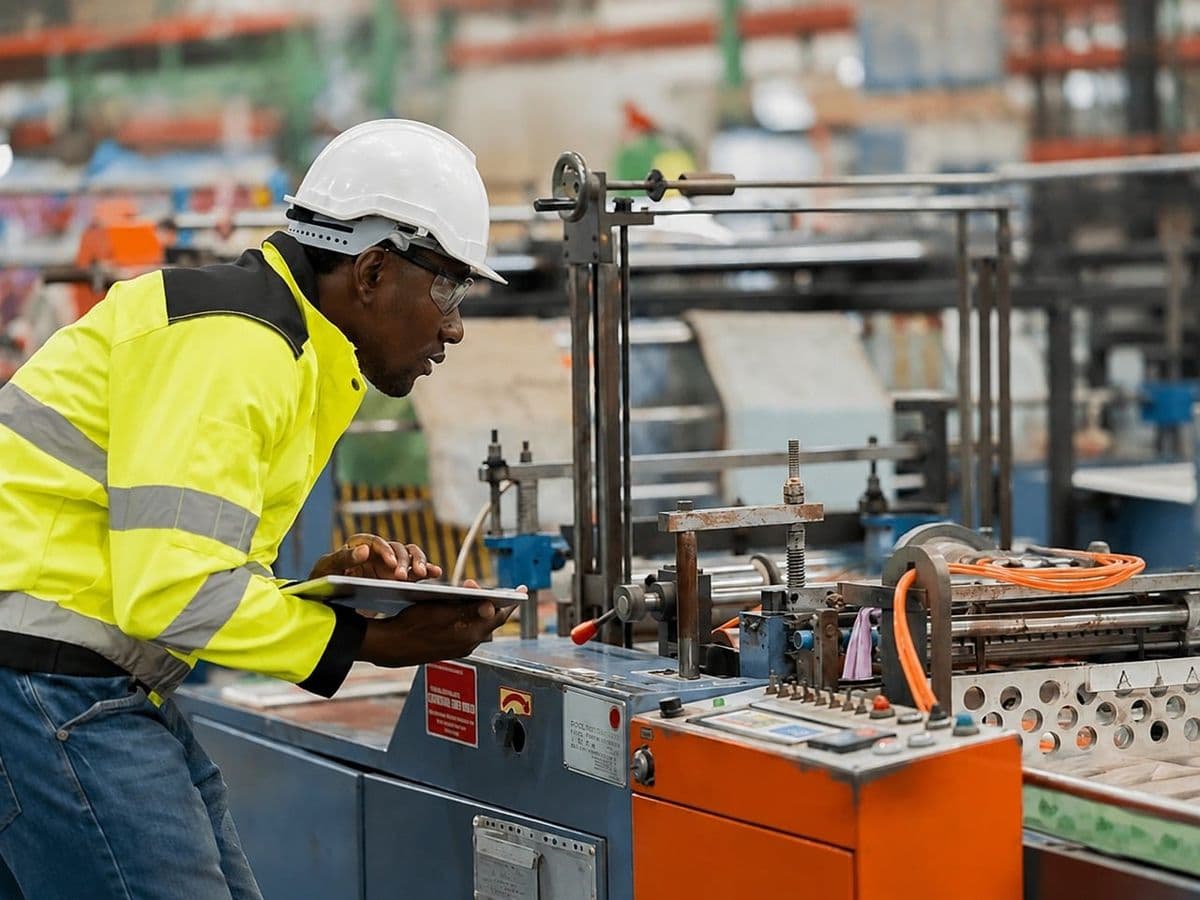
Monday Morning
The production manager is on the phone — a customer wants to know where their order is. He puts them on hold, walks across to a whiteboard, checks a printed schedule, then opens a spreadsheet on the office computer. "I'll call you back," he says.
Production data lives in spreadsheets, whiteboards and people's heads. Quality checks are on clipboards that get typed up later — if they get typed up at all. Equipment runs until it breaks. And the accounting software sees what happened weeks after the fact, because someone has to retype it all.
Off-the-shelf software covers part of this, but most Australian manufacturers end up changing their processes to fit the software, or patching the gaps with spreadsheets. This guide covers the main options in Australia, when each one fits, and when custom manufacturing software — built around how your plant actually works — is the better call.
Manufacturing Software Options in Australia
The market ranges from lightweight inventory tools to full ERPs. Each has a place, and the right choice depends on your production process, your team and what you already have.
Lightweight Inventory and Manufacturing
Cloud-based systems that handle inventory, bills of materials, purchasing, basic production and sales orders. They connect to your accounting software and work well for manufacturers with straightforward processes.
In Australia: Cin7 and Unleashed are widely used by Australian manufacturers. Dear Inventory is another option in this space.
Best for: Smaller manufacturers, assembly, wholesale with light manufacturing
Limitation: Limited production scheduling, no advanced quality or traceability, basic job costing
Mid-Range ERP
Full ERP systems with manufacturing modules: production planning, work orders, quality, purchasing, CRM and financials in one system. More capable than the lightweight tools, but more complex to set up.
In Australia: MYOB Advanced, ERPNext and NetSuite all have manufacturing modules used in Australian operations.
Best for: Growing manufacturers with complex production, multiple product lines or compliance needs
Limitation: Longer implementation, higher cost, and your specific process may still need custom work on top
Industry-Specific Systems
Software built for a specific kind of manufacturing: food and beverage (with lot traceability, allergen tracking, recall support), metal fabrication, timber and so on.
In Australia: There are purpose-built systems for food manufacturing, sheet metal, timber processing and other niches. Each has deep features for its industry but is narrow outside it.
Best for: Manufacturers in regulated or specialised industries
Limitation: Often doesn’t handle the accounting, or the connection to your existing accounts is weak
Custom-Built Software
Software built around your specific production process, quality checks and reporting, connected to your existing ERP and accounting systems. You own it, and it fits exactly.
In Australia: We build custom systems for production tracking, quality gates, batch traceability, dashboards and reporting, and field data capture for Australian manufacturers, builders and forestry operations.
Best for: Operations where the off-the-shelf options don’t fit your process, or you need a connecting piece between systems that don’t talk to each other
Limitation: Costs more up front and needs maintaining over time. If an existing product does the job, buy it.
For a deeper look at the ERP side, see manufacturing software Australia and choosing an ERP for a 5–10 million dollar business.
What Custom Manufacturing Software Looks Like
We build practical software that your team will actually use — designed for real conditions on the factory floor, not a demo room.
Production tracking
See what's happening across your factory as it happens: work orders, who's working on what, and progress on any device. No more walking to the whiteboard. For fabrication shops moving off Excel, our production planning guide covers what to move first.
Quality and inspection systems
Digital quality checks, inspection records and non-conformance tracking that replace clipboards and give you an audit trail without the filing cabinet. For food manufacturers, this includes batch traceability and allergen records — see our guide to allergen matrix and label records.
Dashboards and reporting
Live dashboards showing the numbers that matter to your business, pulling from several systems so nobody has to assemble a report by hand. We build these in Power BI, Tableau or as a standalone screen, depending on what suits your team.
System connections
Often the biggest value is not a new system but connecting the ones you already have. Production data flows to your ERP, which flows to your accounting software. No more retyping between systems. See the parts of an ERP implementation your vendor won't do for where integration work typically sits.
Job costing for manufacturers
Tracking material, labour and overhead costs by job or batch, connected to your accounts so the margin is always current. For manufacturers running jobs through Xero or MYOB, see manufacturing costing with Xero and MYOB.
Buy Off the Shelf, or Build?
If an existing product does the job, buy it. Custom software is only worth the investment when your process genuinely doesn't fit what's available.
Buy when
- Your production process is standard for your industry
- An off-the-shelf ERP or manufacturing system covers most of what you need
- The gap is integration (connecting systems), not a missing product
- You want vendor support and updates you don't have to maintain
Build when
- Your production, quality or reporting process has steps no product handles
- You run several systems that don't talk to each other, and you need a connecting piece
- You've tried configuring an off-the-shelf system and the spreadsheets on the side keep growing
- Your team needs something simple and purpose-built that they'll actually use on the floor
How We Work
Spend time on your site
We learn how your operation actually works — the production flow, the quality checks, the reporting, and which systems are involved. Not how a textbook says it should work.
Show you something early
We show you a working version within a few weeks. Your team tries it, gives feedback, and we refine it before building the full system. No waiting months to see something.
Build and connect
We develop, test and deploy the system. We train your team and make sure it works on the devices they actually use, connected to your existing ERP and accounting software.
Stick around
We don't disappear after go-live. We provide ongoing support and make adjustments as your business changes. We've had client systems running since 2005.
Related
Frequently Asked Questions
Need Manufacturing Software That Fits?
Tell us what's not working. We'll tell you honestly whether custom software is the right solution, or whether an existing product properly set up and connected would do the job. Fixed quote after a free initial chat.
Free initial chat. No sales pressure - if we're not the right fit, we'll say so.
Prefer to talk? Call 1300 470 091
Got a spec or files? Email [email protected]
Part of our guide: Inventory Systems Guide